Eight centuries of change
How the Louvre became the museum you see today
The Louvre was never designed in a single period. Kings, emperors, governments and architects repeatedly enlarged and changed it, which is why medieval foundations, Renaissance rooms, imperial apartments and modern architecture now exist within the same complex.
01
Late 12th century
The Louvre begins as a fortress
The earliest Louvre was built on the western side of medieval Paris as a defensive fortress. Its walls, moat and central keep belonged to a very different Paris from the monumental city surrounding the museum today.
What remains
Parts of the medieval foundations can still be seen beneath the present palace, making the museum’s earliest history physically visible.
02
14th century
A fortress gradually becomes a royal residence
As Paris expanded, the Louvre lost much of its original defensive importance. The site was increasingly adapted for royal use, beginning its long transition from military architecture to palace.
Why this matters
The Louvre’s identity as a palace developed centuries before anyone planned to use the building as a public museum.
03
16th century
François I creates a Renaissance palace
In 1528, François I ordered the medieval keep demolished and began transforming the Louvre according to Renaissance architectural ideas. The change replaced the image of a fortress with that of a sophisticated royal palace.
A wider cultural shift
François I was also an important art patron and invited Leonardo da Vinci to France, linking the monarchy with the Renaissance culture that later became central to the Louvre’s collections.
04
16th–17th centuries
The palace expands toward the Tuileries
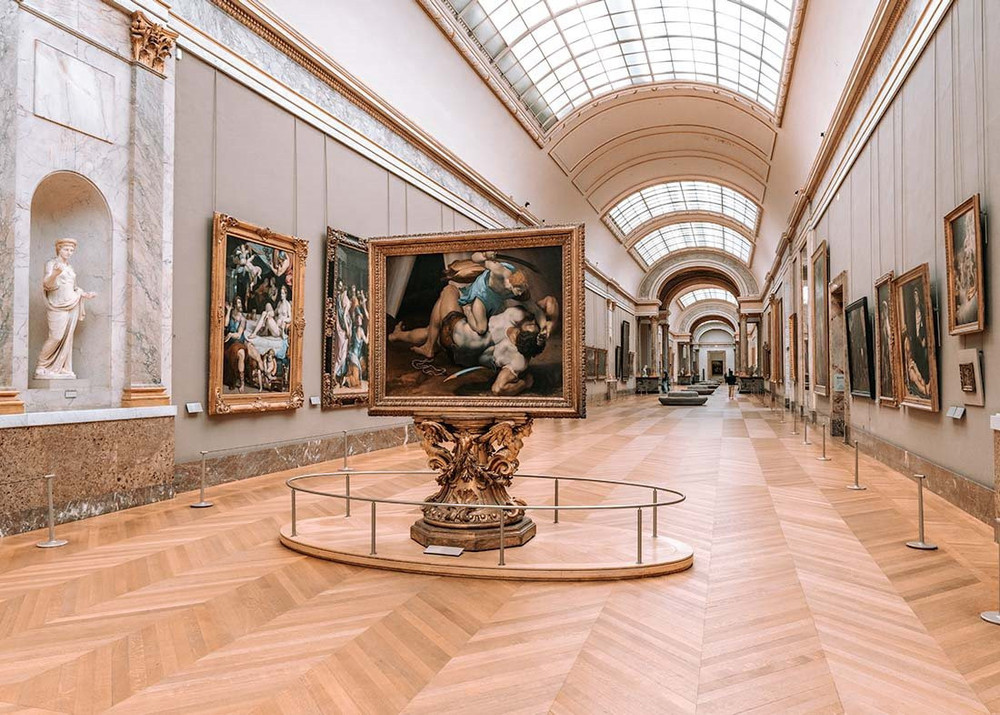
Successive monarchs enlarged the complex, adding new wings, ceremonial rooms and the Grande Galerie stretching along the Seine toward the Tuileries Palace.
What visitors notice today
The unusually long galleries and changing architectural styles reflect centuries of expansion rather than one unified museum plan.
05
1682
The royal court moves to Versailles
When Louis XIV transferred his court to Versailles, the Louvre stopped functioning as the monarchy’s principal residence. Artists, academies and cultural institutions increasingly occupied parts of the palace.
The transition begins
This period helped prepare the Louvre for a future role centred on art, scholarship and public display rather than royal residence.
06
1793
The Louvre opens as a public museum
During the French Revolution, the palace was transformed into the Muséum central des arts. It opened to the public on 10 August 1793, initially displaying works drawn largely from former royal collections.
Major turning point
The Louvre had changed from a building associated with royal power into a national museum intended for public access.
07
19th century
Napoleon and later rulers reshape the palace again
The Louvre continued to grow during the nineteenth century. New wings, richly decorated interiors and administrative spaces helped form the enormous architectural complex visible today.
Look for this
The Napoleon III Apartments in the Richelieu wing preserve the elaborate character of the Second Empire and show how different the Louvre feels outside its conventional galleries.
08
1989
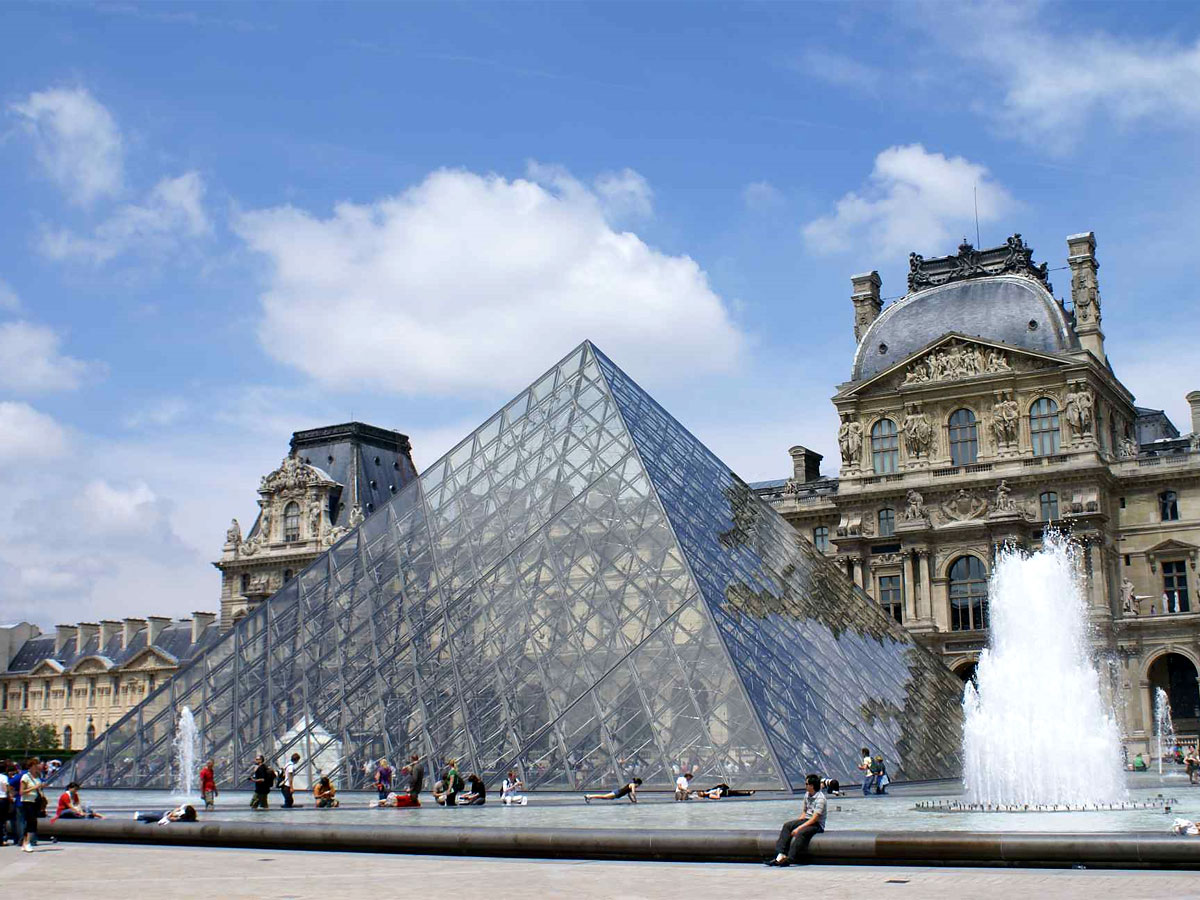
I. M. Pei’s Pyramid creates a new centre
The Grand Louvre project modernised visitor circulation in the 1980s. Architect I. M. Pei designed a central underground lobby reached through the glass Pyramid in the Cour Napoléon.
More than an exterior landmark
The Pyramid connects visitors with the museum’s three main wings and solved a practical circulation problem inside an enormous historic palace.